
Plumbers, electricians, gardeners, mobile hairdressers and cleaners all serve customers at the customer’s location, not at a shop. Google Business Profile has a setup designed exactly for this, called a service-area business — but it is set up incorrectly more often than almost any other part of a profile, and the mistakes quietly cost visibility.
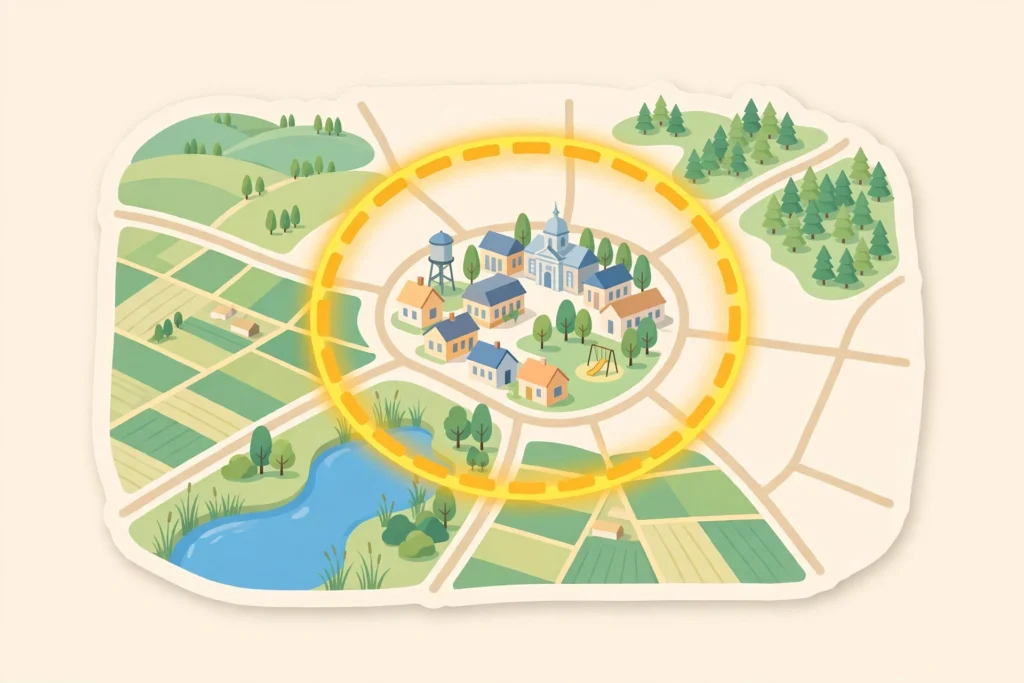
A service-area business tells Google where it works, rather than where customers should visit. Get that distinction right and everything else follows.
The short answer
A service-area business goes to its customers, so its Google profile should hide the address and list the areas genuinely served instead. Name specific towns you actually travel to, keep the area realistic for your trade, and update it when your work changes. Showing a home address, or listing everywhere, are the two mistakes that cost visibility.

Service-area or storefront: which are you?
If customers come to you — a salon, a café, a shop — you are a storefront business and your address should be shown. If you go to customers — a plumber, a tutor who visits homes, a mobile groomer — you are a service-area business and your address should be hidden, because there is nothing for a customer to visit.
Some businesses are hybrids: a showroom customers can visit, plus a team that travels. In that case, show the address and still define the areas you serve. The mistake is the reverse: a business with no premises showing a home address, which sends customers to a private house and creates privacy problems for the owner.
Setting the service area correctly
In your Business Profile settings, a service-area business hides its address and lists the areas it serves instead. The practical rules are:
List areas you genuinely serve. Add the towns, cities or regions you actually travel to — not every place you would like work from. A plumber based in Leeds who lists Manchester, York and Bradford because he occasionally gets a call there is overstating his area, and customers at the far edge will wait longer, pay more in travel, and leave worse reviews.
Use areas, not a giant radius, when you can. Name specific towns or cities rather than drawing the widest possible circle. Where your last twenty jobs actually were is your real service area.
Keep the area realistic for your trade. A mobile hairdresser might cover two or three nearby towns, while a specialist firm might legitimately cover a whole county. The test is always the same: could you get there promptly, at a price the customer would accept?
Check it after any move or expansion. Service areas drift out of date silently: when you take on a new town or stop covering an old one, update the profile the same week.
The rest of the profile still matters
Hiding your address does not excuse a thin profile. Service-area businesses are judged on the same details as everyone else, and often harder, because the customer cannot walk past a shopfront to check you out. Before worrying about anything advanced, run a full profile audit and make sure the foundations are right: a verified listing, the correct primary category, hours that reflect when you actually answer the phone, and a complete services list.
Category choice deserves special attention: a service-area business is often found by trade searches — “emergency plumber near me” rather than “Smith Plumbing.” Choosing the right primary category puts you in front of those searches, and if you set profiles up for clients, getting this right for each one is work that an organised client-profile system can keep on track.
Photos matter just as much without a shopfront: show your vehicle, your team, and finished jobs.
A worked example: one illustrative setup, step by step
Imagine an electrician based in a village outside Nottingham — an illustrative example, not a real business. She works alone, drives a sign-written van, and takes jobs within about 30 minutes’ drive:
- Business type: service-area business, address hidden, because customers never visit her home workshop.
- Service areas: Nottingham, Beeston, West Bridgman, and two nearby villages where she regularly works — four named areas, not the whole East Midlands.
- Category: Electrician as the primary category, with no second category added just because it sounds impressive.
- Hours: Monday to Friday, 8am to 6pm, plus a note in the profile that emergency call-outs are handled by phone — matching the hours she actually answers.
- Photos: the van, a finished consumer-unit replacement (before and after), and a photo of her in uniform at a job.
- A monthly check: once a month she looks at where her jobs actually came from. After three months, she notices two jobs came from a town she had not listed, so she adds it; and one listed village produced nothing, so she removes it.
That last step is the one most businesses skip. A service area is not a one-time setting; it is a record of where you actually work, and it should change as your work changes. For freelancers managing this for several clients, keeping each client’s areas, hours and photos current is recurring work that a single organised routine can hold together.
Mistakes that cost service-area businesses work
Showing a home address. This is the most common error, and it sends strangers to a private address while muddying where the business actually operates.
Listing everywhere. Covering a whole country looks ambitious and performs badly: distant enquiries you cannot serve promptly turn into missed calls, long travel, and disappointed customers.
Leaving the profile empty. No photos, no services, no description reads as a business that may not exist. Customers choosing between a complete profile and an empty one will choose the complete one, even if the empty one is closer.
Forgetting the phone. For a service-area business, the phone is the shopfront. If calls go unanswered during stated hours, the profile’s job is undone no matter how well it is set up. Make sure the number listed is one you actually answer.
A note for readers in the UK, US, Canada and Australia
The setup is the same in all four countries, but the geography differs in ways that matter. In the UK, towns are close together and a service area of three or four named towns is normal. In the US, Canada and Australia, distances are far larger: a rural electrician may legitimately cover a whole county or a long highway corridor. The principle does not change — list where you genuinely go, promptly and at a fair price — but the size of a realistic area does.
Questions owners ask next
I have a workshop customers sometimes visit — storefront or service-area?
You are a hybrid, and hybrids show the address and still define the areas they serve. The mistake is the reverse: a business with no visitable premises showing a home address, which sends customers to a private house and creates privacy problems for the owner. Decide by the customer’s behaviour, honestly: if people genuinely come to you, show wher; if you also travel, list the areas as well.
Can I list a huge area to get more enquiries?
It looks ambitious and performs badly. Covering a whole country — or towns you only occasionally get a call from — produces distant enquiries you cannot serve promptly, which turn into missed calls, long travel and disappointed customers who leave worse reviews. Name specific towns rather than drawing the widest possible circle. Where your last twenty jobs actually were is your real service area.
Does hiding my address hurt my ranking?
No — hiding the address is the setup Google designed for businesses customers never visit, and it is showing one that causes harm. What does hurt a service-area business is a thin profile: you are judged on the same details as everyone else, and often harder, because the customer cannot walk past a shopfront to check you out. A verified listing, the right primary category, real hours, a complete services list and genuine photos carry the weight the shopfront would have carried.
How often should I review my service area?
Monthly, against real jobs. In the worked example above, the electrician checked where her work actually came from once a month: after three months she added a town that had produced two unlisted jobs and removed a listed village that had produced nothing. Do the same after any move or expansion — update the profile the same week. A service area is a record of where you actually work, and it should change as your work changes.
What to do next
Open your profile today and check three things: is the address hidden if customers never visit you, does the service area match where your last twenty jobs actually were, and is your primary category the trade customers search for? Fix whichever one is wrong, then set a monthly reminder to re-check the area against real jobs. If you manage profiles for clients and want the areas, photos and reporting organised in one routine, you can see the system I use on my Local Alchemist AI page. Note that it is a tool you run yourself: buyers need their own hosting and their own API keys, and AI output needs a human review before anything goes live — it is never fully automatic.
Disclosure: the page linked above contains an affiliate link. If you buy through it, I may earn a commission at no extra cost to you.