
If you build websites or do marketing work for local businesses, you probably already know how to fix a Google Business Profile. The harder part is how to sell Google Business Profile services as a clear, repeatable offer — something a busy owner understands in two minutes and keeps paying for because the value is obvious.
This guide is the practical shape of that offer: who to approach, how to package the work, what to deliver each month, and how to talk about it without hype.
The short answer
Freelancers can sell Google Business Profile services as a setup-plus-monthly-care package: fix the profile once — categories, services, details, photos, duplicates — then keep it healthy with review replies, fresh photos and posts, current hours, and a one-page monthly report. Lead with a short audit against the client’s top competitors, not a pitch.

Why this service is an easier sell than most
Local business owners may not care about “SEO,” but they care deeply about the phone ringing. A Google Business Profile service connects directly to that: being found on Google Maps, looking trustworthy in the results, and turning searches into calls.
It also solves a problem owners already feel. Most know their profile exists; many know it is incomplete, out of date, or full of unanswered reviews. You are not inventing a need — you are offering to take a neglected, visible asset off their plate. That makes the conversation about their customers, not about your skills.
Who to approach first
Start where trust already exists:
- Past website clients. You built their site; their profile is the natural next step, and you already know their business.
- Businesses with visibly neglected profiles. Wrong hours, no photos since opening, three unanswered one-star reviews. The problem is easy to show, respectfully.
- Trades and appointment businesses. Plumbers, electricians, salons, clinics, garages — businesses where a map search leads straight to a booking or a call.
Avoid businesses that are not really local, and avoid anyone you would have to pressure. The best first clients are owners who already get some work from Google and can feel the gap.
Open with an audit, not a pitch
The easiest way to sell Google Business Profile services is to show, not tell. Run a short audit of the prospect’s profile — category, services, reviews, photos, hours — and mark it against the two or three competitors ranking above them. A one-page summary with five specific findings will always beat a generic pitch deck.
Keep the tone helpful. “Your primary category is set to X, but the businesses above you use Y — that alone can be why you are missing searches” starts a conversation. The audit also sets your baseline, so later reports can show what changed.
Package it as setup plus monthly care
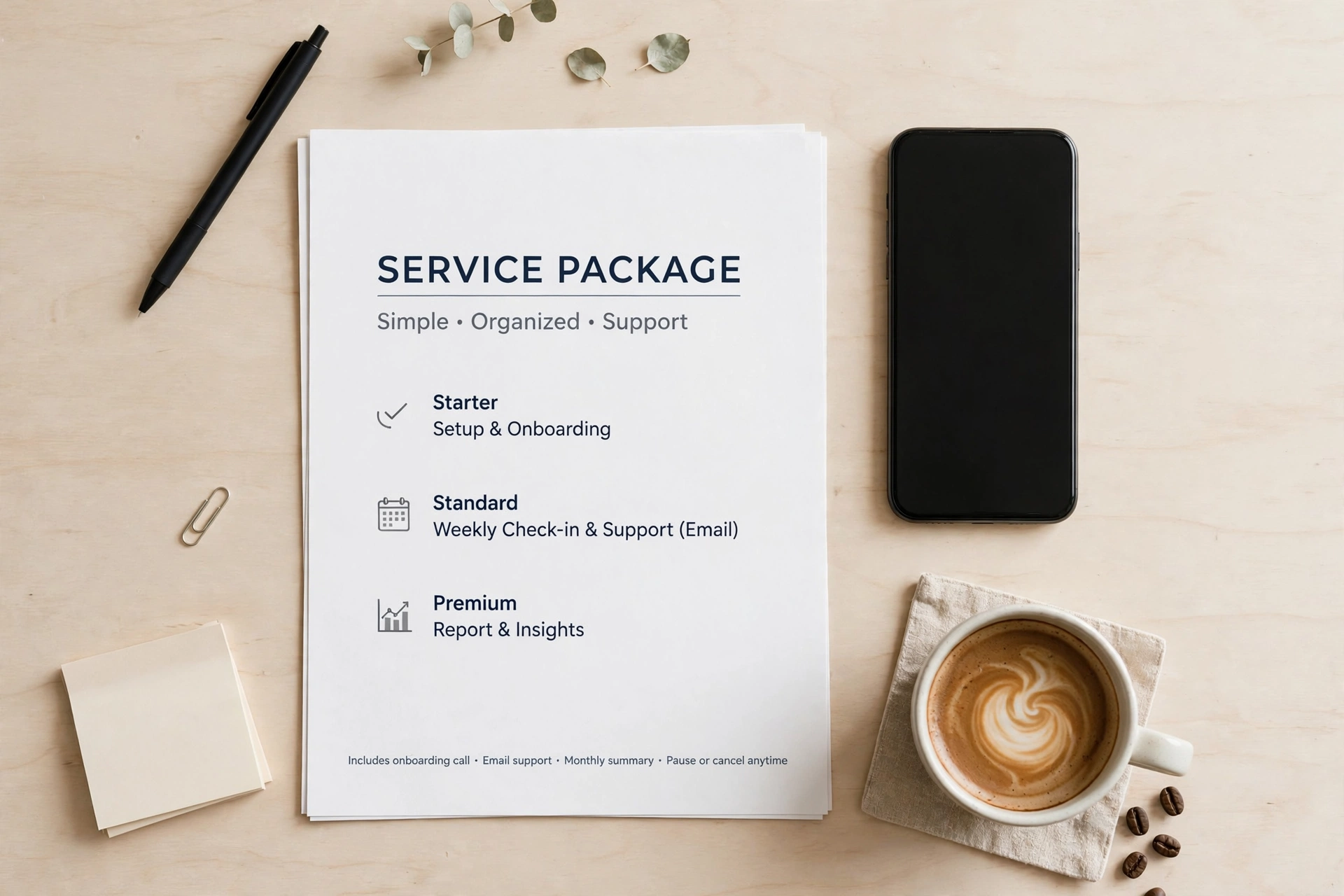
Owners understand this shape: fix it properly once, then keep it healthy. A simple, honest package looks like this:
One-time setup:
- Correct primary and secondary categories
- Full services list with descriptions
- Name, address and phone consistency check
- Hours, attributes and opening date completed
- Photo refresh with the owner’s real photos
- Duplicate listings identified and cleanup started
Monthly care:
- Review monitoring and replies, written in the owner’s voice
- New photos and profile posts added regularly
- Hours updated for holidays and changes
- Services kept current as the business changes
- A short monthly report the owner will actually read
The monthly report is the retention tool
Clients rarely cancel a service they can see working. Your report should fit on one page and answer three questions: what did we do, what changed, and what is next. Include the basics — calls, direction requests and searches from the profile’s own insights, reviews gained and replied to, and the work completed.
Skip vanity metrics and jargon. An owner who understands the report renews; an owner who is confused by it eventually asks why they are paying. Keep the report honest, too: a quiet month reported plainly builds more trust than dressed-up numbers.
Pricing without the awkwardness
Price the setup and the monthly care separately, in plain figures, before you start. A modest setup fee reflects the audit and fix work; the monthly fee reflects the ongoing routine, priced against the value of even a small number of extra enquiries for that business — not against hours you hope they do not count.
Two rules keep pricing clean. First, never promise rankings or a set number of calls; you are selling the work, the consistency and the reporting, not a guaranteed position you do not control. Second, put what is included in writing, briefly. Most disputes between freelancers and local clients are really just unclear expectations wearing a disguise.
Delivering it without burning your week
The work itself is light; the risk is it scattering across logins, reminders and good intentions. Keep one repeatable routine per client: a monthly checklist, a set time for review replies, and a standard report format. If you use software to organise the profile work, reporting and content drafts, treat its output as a draft — AI-written posts and replies always need a quick human read before they go out under a client’s name. Nothing about this service is fully automatic, and clients are paying for your judgement as much as your time.
Questions owners ask next
How should I price the service?
Price the one-time setup and the monthly care separately, in plain figures agreed before you start. Set the monthly fee against the value of even a small number of extra enquiries for that business, not against hours you hope the client does not count. And put what is included in writing, briefly — most disputes in this work are really just unclear expectations wearing a disguise.
The owner says “I could do that myself” — what do I say?
Agree with them — honestly, they could. What they are paying for is that it actually happens, every month, without them thinking about it, plus proof in a report they can read in a minute. Most owners already know their profile is neglected; you are offering to take a visible, neglected asset off their plate. That framing keeps the conversation about their customers, not your skills.
How many clients can one freelancer handle with this service?
The work per client is light — the risk is not the volume, it is the work scattering across logins, reminders and good intentions. Keep one repeatable routine per client: a monthly checklist, a set time for review replies, and a standard report format, and the same service stays deliverable as you add clients. The moment each client needs a different system, the week fills up.
Should I guarantee more calls or a top ranking?
Never. You do not control Google, and promising a position or a set number of calls sets up a disappointed client and a difficult renewal. Sell what you genuinely control: the work done properly, the consistency month after month, and honest reporting that shows what changed. A quiet month reported plainly builds more trust than dressed-up numbers.
What to do next
Pick three past clients, run the short audit on each, and send one page of findings with the setup-plus-monthly offer attached. If you want the delivery routine organised in one system rather than spreadsheets and reminders, the one I use is described on my Local Alchemist AI page.
Disclosure: the page linked above contains an affiliate link. If you buy through it, I may earn a commission at no extra cost to you.