
Google Business Profile optimization pricing is one of the first things freelancers ask about, and one of the hardest to pin down, because there is no official rate card. What follows are example ranges that freelancers commonly charge in the UK, US, Canada and Australia markets. Treat them as starting points to test with your own clients — not as facts, and never as a promise of what you will earn.
The short answer
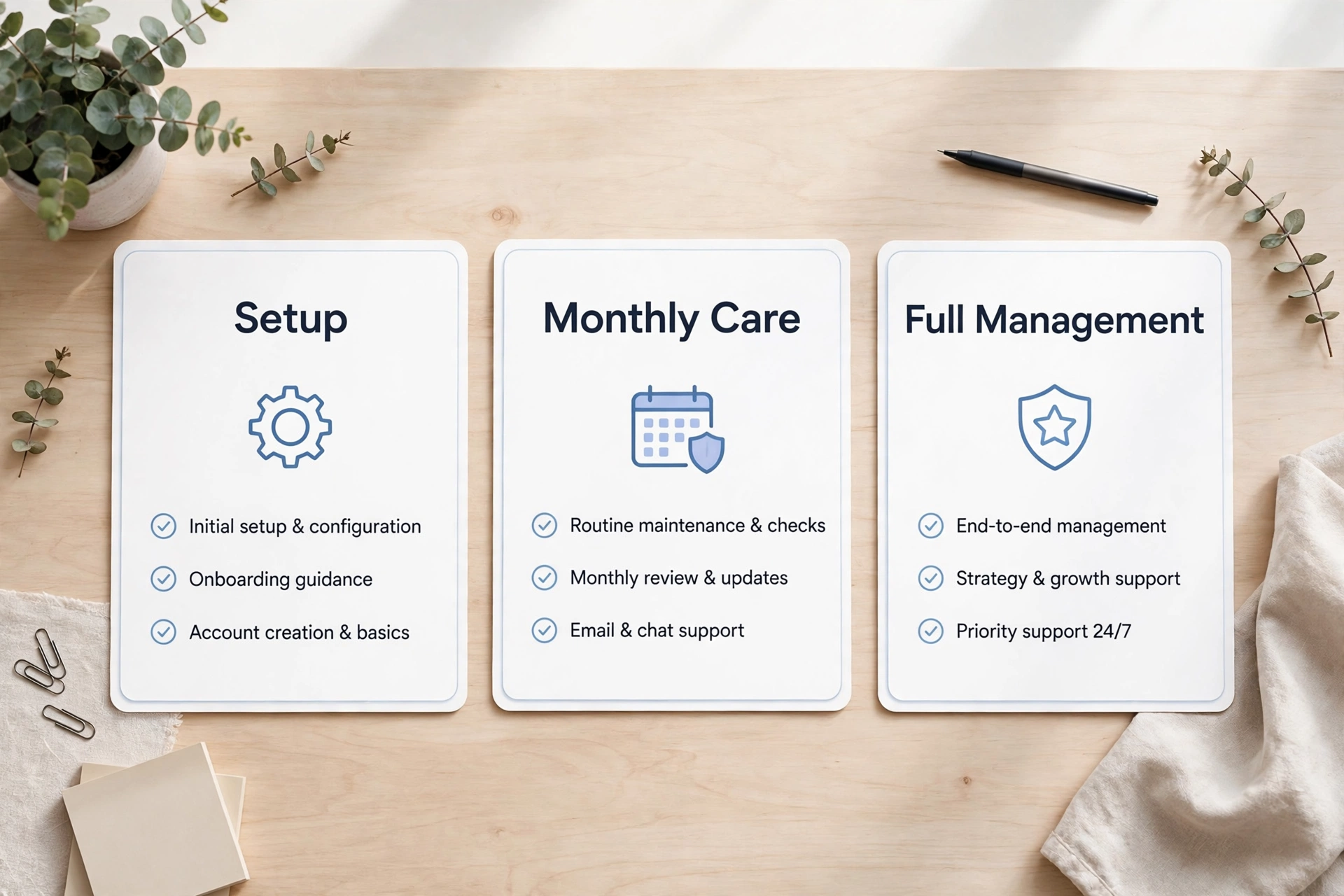
There is no official rate card for Google Business Profile optimization. Example ranges freelancers commonly charge: a one-off setup or clean-up around £100–£350 in the UK or $150–$450 in the US, monthly management around £100–£300 or $150–$400, and a standalone audit around £40–£120. Treat these as test starting points, not promises.
What the client is actually paying for
A business owner is not paying for button-clicking. They are paying for three things: getting found (a complete, correct profile that matches real searches), getting chosen (reviews, photos and posts that make the phone ring), and proof (a simple report showing what changed). Price against those outcomes, and the conversation gets much easier than pricing by the hour.
Example range 1: one-off profile setup or clean-up
A one-time job — claiming the profile, fixing the category and services, correcting details everywhere, adding photos, and setting up the review link — is commonly offered in the region of £100–£350 in the UK, or roughly $150–$450 in the US. Small profiles at the simple end sit near the bottom of that range; multi-service or messy profiles with duplicates sit near the top. Use it as a test range for your market, then adjust based on how long the work really takes you.
Example range 2: monthly profile management
Ongoing care — weekly posts, new photos added, every review replied to, details kept current, and a one-page monthly report — is commonly packaged around £100–£300 per month in the UK, or roughly $150–$400 in the US. The range depends on how much content and how many locations are included. A single-location trades business is a simpler package than a chain of shops.
Example range 3: a paid audit as the door-opener
Some freelancers sell a standalone audit first — a written review of the profile with a fix list — commonly in the £40–£120 range, sometimes credited against the setup fee if the client goes ahead. An audit lowers the client’s risk, shows your thinking, and gives you a natural follow-up conversation. It also filters out clients who were never going to pay for the full job.
Google Business Profile optimization pricing: how to set your own number
Start with the example ranges, then sanity-check three things. First, your time: time your first two or three jobs honestly and see whether the fee respects your hours. Second, your market: a London agency-facing client and a rural sole trader will not accept the same fee, and that is fine. Third, your package contents: the clearer the deliverables — posts per month, review replies, report — the easier it is to hold your price without discounting.
Change one variable at a time when you test. If every enquiry says yes instantly, your test price is probably low. If everyone walks away after the price, either the price or the explanation of value needs work — and it is usually the explanation. Keep brief notes on each conversation: the trade, the size of the business, the price quoted, and the reaction. After ten of those notes you will know more about your market’s real pricing than any guide can tell you.
Example range 4: add-ons that change the price
The ranges above shift when the job grows. Extra locations, a profile that needs a suspension appeal, a business with no website at all, or a client who wants review-request messages set up as part of the package — each adds time, and the fee should say so openly. List add-ons separately in your quote rather than quietly absorbing them; clients accept extra charges they can see the reason for, and resent surprises. Equally, if a profile is already in good shape and the setup will be quick, saying so and charging at the lower end buys trust that pays you back in renewals and referrals.
How to present the price so it makes sense
Put the offer on one page: what is included, what it costs, and what happens next. For a monthly package, list the rhythm — posts each month, photos added, every review replied to, the one-page report — because clients renew routines they can picture. Avoid long proposals full of jargon; the owner of a busy trades business will not read them, and an unread proposal cannot be agreed to. If a prospect hesitates on the monthly fee, offer the one-off clean-up first with the monthly conversation scheduled after they have seen the difference. A smaller honest yes today is worth more than a big maybe that never starts.
What never to do with pricing
Never guarantee a ranking position in exchange for a fee; no honest freelancer controls Google. Never copy a competitor’s price without knowing what their package includes. And never hide the ongoing nature of the work: a profile that is set up once and abandoned slowly slides back, which is exactly why the monthly package exists.

Questions owners ask next
Should I charge by the hour or as a package?
Package it. A business owner is not paying for button-clicking; they are paying for getting found, getting chosen, and proof it is working — and a package with clear deliverables prices against those outcomes. Use your hours privately as a sanity check: time your first two or three jobs honestly and confirm the fee respects them. The clearer the package contents, the easier it is to hold your price without discounting.
A prospect says the monthly fee is too high — what do I do?
First check the explanation before the number: if everyone walks away after hearing the price, it is usually the explanation of value that needs work, not the fee. A practical fallback is to offer the one-off clean-up first, with the monthly conversation scheduled after they have seen the difference. A smaller honest yes today is worth more than a big maybe that never starts.
Can I charge extra for add-ons like a second location or a suspension appeal?
Yes — and you should list them openly. Extra locations, a profile needing a suspension appeal, a business with no website at all, or review-request messages set up as part of the package each add real time. Clients accept extra charges they can see the reason for, and resent surprises. The mirror rule also applies: if a profile is already in good shape and the setup will be quick, saying so and charging at the lower end buys trust.
Can I guarantee a Map Pack position to justify my price?
Never. No honest freelancer controls Google, and guaranteeing a ranking in exchange for a fee sets up a client you will disappoint. Charge for the work, the deliverables and the reporting instead — and never hide the ongoing nature of the job, either. A profile set up once and abandoned slowly slides back, which is exactly why the monthly package exists.
What to do next
Pick a test package from the ranges above, write down exactly what it includes, and offer it to your next few prospects. If running the monthly routine — profile checks, review replies, posts and reporting — across several clients feels like a lot of separate tools, you can see the system I use for it on my Local Alchemist AI page.
Disclosure: the page linked above contains an affiliate link. If you buy through it, I may earn a commission at no extra cost to you.