
Most businesses treat reviews as something that happens to them. The smart ones treat the reply as the real opportunity. Learning how to reply to Google reviews well matters because your answer is not really written for the reviewer — it is written for the dozens of future customers who will read the exchange while deciding whether to trust you.
A good reply is short, human, and specific. Below is a simple formula, then real example replies you can adapt for happy, mixed, and unhappy customers.
The short answer
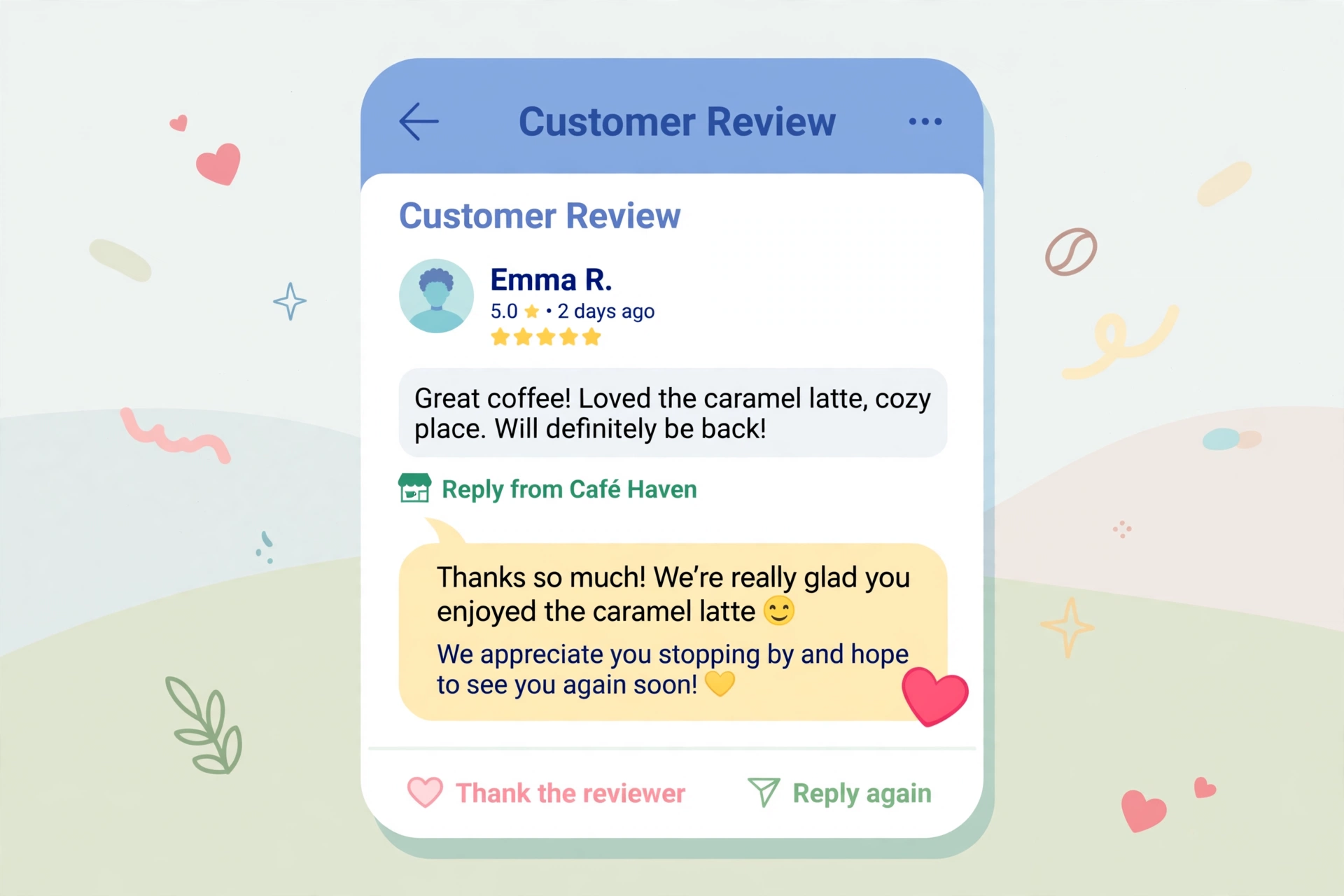
Reply to every Google review with a short, human, specific answer: thank the reviewer by name, mention one detail from their review, and close warmly — 20 to 40 words is plenty. Your reply is written less for the reviewer than for the future customers reading the exchange to decide whether to trust you.
Why your replies matter as much as the reviews
A profile with warm, recent replies looks alive. It shows the business reads feedback, cares about the details, and will probably treat the next customer well too. Silence, by contrast, reads as indifference — and a single unanswered angry review can sit at the top of your profile doing damage for months. Replying to every review, good and bad, is one of the cheapest trust signals you control completely.
The 3-part formula for a good reply
Almost every good reply follows the same shape:
- Thank them by name and sound like a person, not a template.
- Mention one specific detail from their review — the job, the product, the team member — so it is clearly a real reply.
- Close warmly and briefly — a welcome back, an offer to help, or a note that their issue is being handled.
That is all. Twenty to forty words is plenty for most replies.
Example replies for positive reviews
For a 5-star review about a specific job:
“Thanks so much, Sarah — really glad the new boiler has the house warm again. Shout if you need anything at all. — Dan”
For a short, general 5-star review:
“Thank you for the kind words and for choosing a local business — it genuinely means a lot to the whole team.”
And for the review that praises a team member by name, pass the credit on visibly:
“Thanks, James — I’ll make sure Priya sees this. She takes real pride in her colour work and she’ll be chuffed to bits.”
Replies like that do double duty: the customer feels noticed, and your staff get a small public moment of recognition that costs you nothing.
Notice what these do not do: no sales pitch, no “please tell your friends,” no keywords stuffed in. Just gratitude with a human fingerprint on it.
Example replies for mixed reviews
A 3-star review is a gift: the customer is telling you exactly what to fix. Thank them, acknowledge the specific point, say what you are changing:
“Thanks for the honest feedback, Mark. You’re right that the wait was too long on Saturday — we’ve added a second stylist at weekends so it shouldn’t happen again.”
Future readers see a business that listens. That often wins more trust than another row of perfect scores.
Example replies for negative reviews
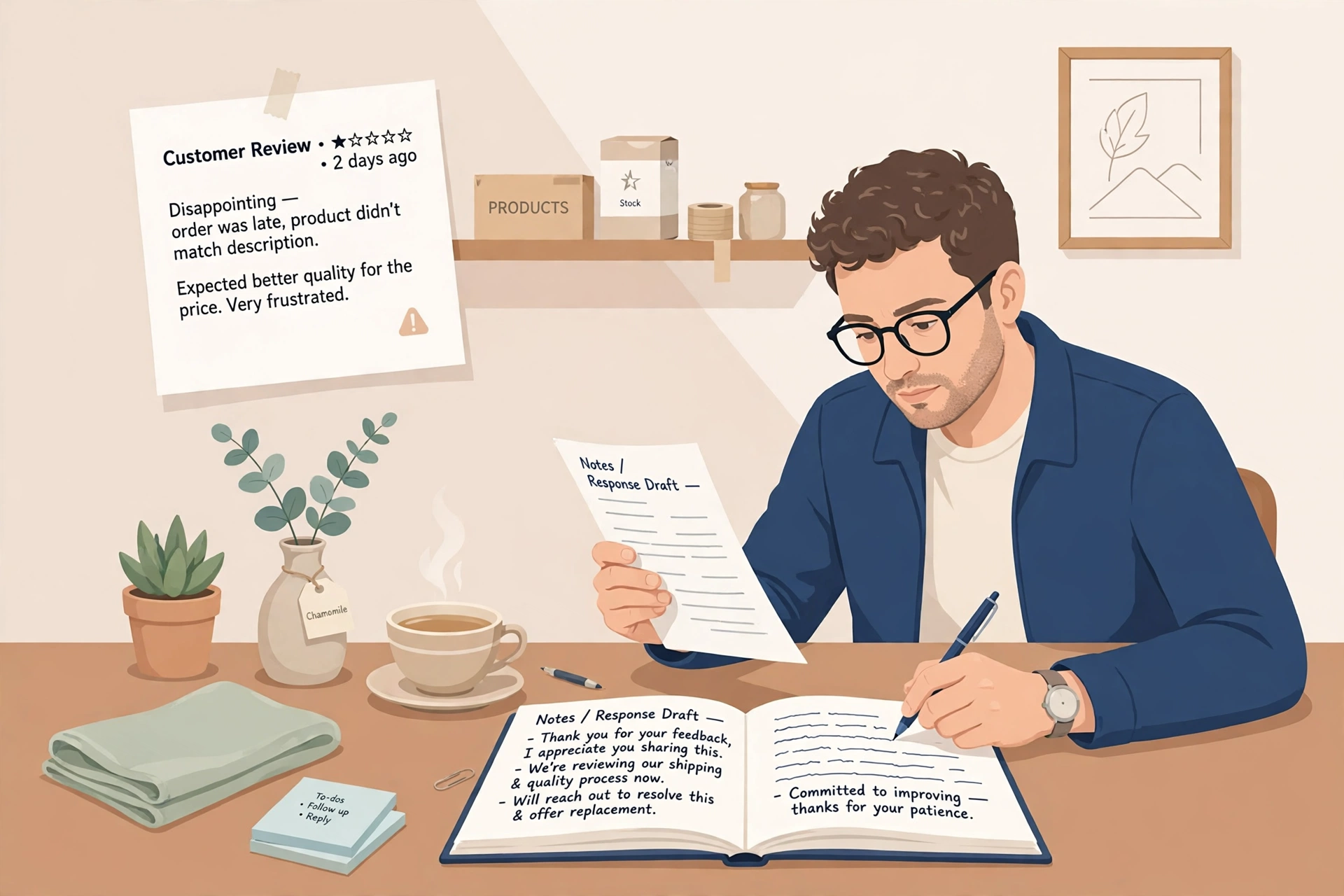
Stay calm, never argue, and move the conversation offline:
“I’m sorry we let you down, Priya — that’s not the standard we aim for. I’ve passed this to our manager, who will call you today to put it right. — The Team”
If a review is clearly fake or describes a job you never did, do not accuse the reviewer in public. Reply once, neutrally — “We have no record of this visit, but we’d like to look into it — please contact us directly” — and flag the review to Google through your dashboard. A measured reply protects you with readers even while the review itself is being reviewed.
What never to put in a reply
Never share private details about the customer’s job, health, address, or payments. Never blame the customer, even when the review feels unfair. Never paste the identical reply under every review — readers notice, and it quietly undoes the trust you were building. And never offer discounts or freebies publicly in exchange for changing a review; it looks like buying forgiveness and can breach Google’s policies.
Keeping up without it eating your week
Reply in small batches — ten minutes, two or three times a week — rather than letting reviews pile up for a month. Drafting help is fine: plenty of owners use templates or AI tools to draft a first version, but a human should always read and personalise the reply before posting, because one wrong detail in a public reply is worse than a plain one. The voice must stay yours.
How quickly should you reply?
There is no official deadline, but sooner is visibly better. A reply posted within a day or two tells readers this business is staffed, attentive, and current — and the reviewer themselves often appreciates the prompt thanks, which is how one-off customers turn into regulars. Negative reviews deserve the fastest replies of all: a calm response sitting under a complaint takes most of its sting away for everyone who reads it later, while a complaint left unanswered for weeks looks confirmed. If you have a backlog, start with the newest and the harshest, then work backwards until you reach zero unanswered.
Questions owners ask next
How quickly should I reply to a review?
Within a day or two is a good standard. A prompt reply tells readers the business is staffed, attentive and current, and reviewers themselves often appreciate the quick thanks. Negative reviews deserve the fastest replies of all: a calm response sitting under a complaint takes most of its sting away for everyone who reads it later, while a complaint left unanswered for weeks looks confirmed.
Can I paste the same reply under every review?
No. Identical replies are easy for readers to spot, and they quietly undo the trust you were building — the whole value of a reply is the human fingerprint on it. Use the same shape every time (thank by name, one specific detail, warm close) but write the words fresh, because the detail is what proves a person actually read the review.
Should I offer a discount in my reply to make up for a bad experience?
Not publicly, and never in exchange for changing the review. Offering freebies under a complaint looks like buying forgiveness and can breach Google’s policies. Handle the fix privately instead: apologise in the reply, move the conversation offline, and put the problem right directly with the customer.
What do I do about a review from someone who was never a customer?
Do not accuse them in public. Reply once, neutrally — “We have no record of this visit, but we’d like to look into it — please contact us directly” — then flag the review to Google through your dashboard. The measured reply protects you with readers while Google reviews the review itself, and arguing would only make your business look worse than the fake review does.
What to do next
Go to your profile now and reply to your five most recent unanswered reviews using the formula above. Then set the twice-a-week habit. If you handle reviews for clients and want the chasing, drafting, and reporting organised, you can see the system I use on my Local Alchemist AI page. Before you set a target, check how many Google reviews a business needs.
Disclosure: the page linked above contains an affiliate link. If you buy through it, I may earn a commission at no extra cost to you.