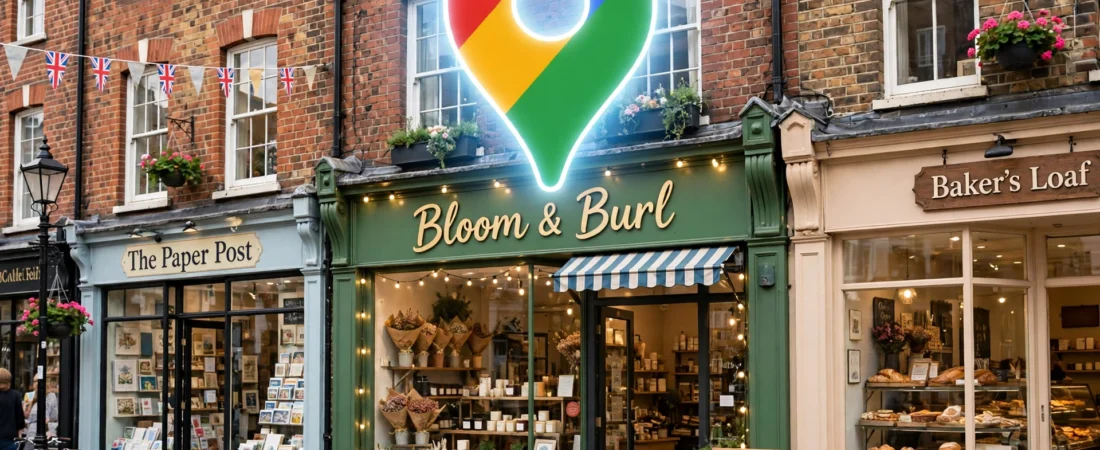
If you want to rank higher on Google Maps, UK customers are deciding between you and the shop two streets away based on what your Google listing shows. For most high street businesses, the listing — not the website — is now the front door. The good news is that the fixes are practical, mostly free, and the same whether you run a café in York, a salon in Bristol, or a plumbing firm covering Leeds.
The short answer
UK small businesses rank higher on Google Maps by completing the profile properly: the most specific primary category, a full services list, accurate hours including bank holidays, consistent details across UK directories, real photos added regularly, and a steady habit of asking for reviews and replying to every one. Consistency through the year beats one-off fixes.
Start with the profile basics, done properly
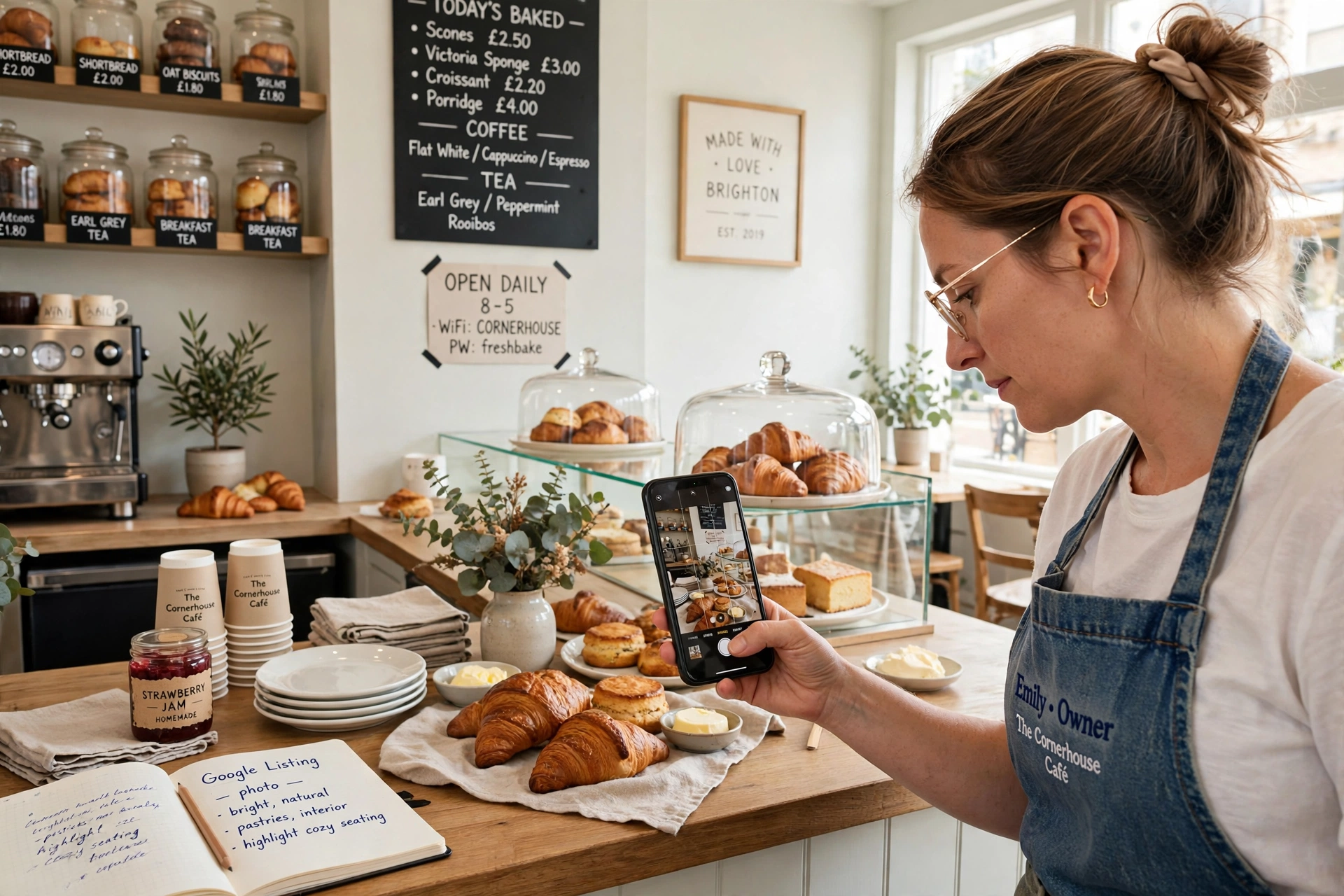
Claim your Google Business Profile and complete every field: opening hours (including bank holidays), phone number, website, and a plain description of what you do. Choose the most specific primary category available — “nail salon” rather than “beauty salon” if that is your main trade. Then list your services one by one. A half-finished profile is the single most common reason a good business sits below weaker competitors.
Reviews: the high street trust signal
British customers check reviews before trying somewhere new, and Google knows it. Build a steady habit of asking: a short message after a job, a small card by the till with your review link, a QR code on the receipt. Reply to every review as well, even just to say thank you. A profile with regular, recent reviews and polite replies looks alive; one with twelve reviews from 2022 does not. Replying matters more than many owners realise: a courteous response to a complaint, written for the next customer reading it rather than for the complainer, often does more for trust than another five-star rating. Keep replies short, thank the reviewer by name where you can, and never copy and paste the identical response fifty times — readers can tell, and it quietly undermines the genuine ones.
Photos that look like your actual shop
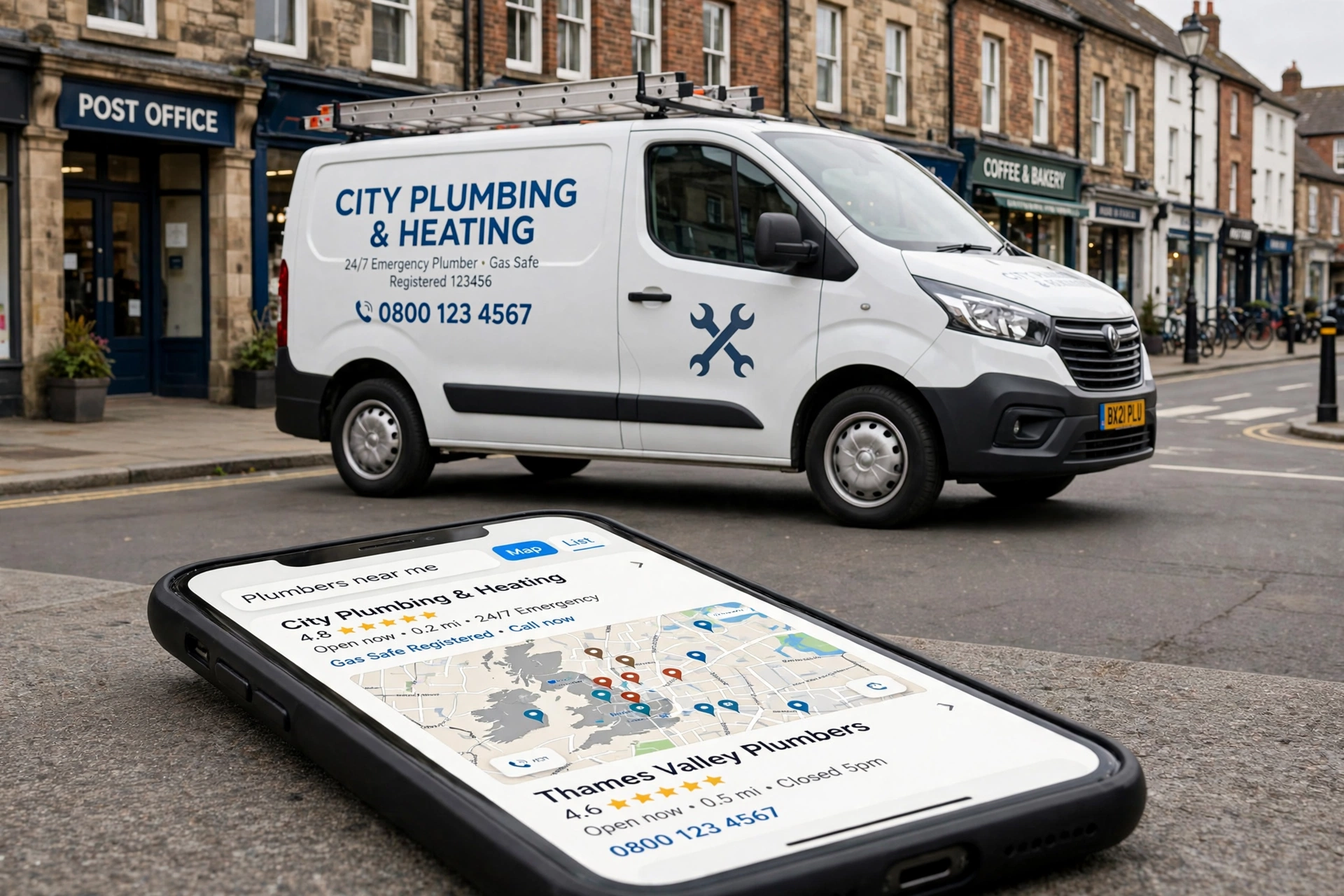
Add real photos regularly — the shopfront so people recognise you from the street, the interior, the team at work, finished jobs for trades. For a café in York, that might be the morning’s bakes and the seating area. For a Leeds plumber, before-and-after shots of tidy work. Phone photos are fine; looking genuine matters more than looking polished. A useful test: look at your listing as a stranger would, next to your two closest competitors, and ask which business looks most real and most active. If the honest answer is not yours, your next photos and reviews are the fix.
Get your details consistent across UK listings
Your name, address and phone number should read identically on your profile, your website, Facebook, and UK directories such as Yell and Thomson Local. If you have moved or changed your number in the past, old listings with the old details are probably still out there confusing Google. Search your own business name, find the stragglers, and correct them.
Rank higher on Google Maps UK-wide: think in towns and areas
Most local searches are tied to a place — “hairdresser near me” in Bristol behaves like a search for Bristol hairdressers. Make sure your profile’s service areas are set correctly if you visit customers, mention the towns you cover on your website, and keep your address details accurate if customers come to you. If you open a second location, it needs its own profile, properly verified, rather than stretching the first one.
Services, attributes and the details customers filter by
Beyond the basics, fill in the sections people filter on: the full services list with short descriptions, and attributes such as wheelchair accessible, dog friendly, women-led, or outdoor seating where they genuinely apply. A customer searching for a specific need — a salon that does curly hair, a garage that handles electric vehicles — is matched on these details, not on your business name. Each true detail you add is one more search you can appear in, and one more reason for a customer to pick you over the place that left the section blank.
Seasonal habits that suit how Britain searches
British search behaviour has a rhythm. Home services spike when the weather turns, hospitality fills up around school holidays, and retail peaks from late November. Get ahead of each season on your profile: update special hours before bank holidays and the Christmas period, post about seasonal services a few weeks before demand arrives rather than after, and refresh your photos so the business looks like it does right now — not last summer. Small, timely touches like these are easy to overlook, and they are exactly the kind of thing a competitor who updates twice a year will miss.
Keep it alive through the year
Local rankings reward businesses that look active. Update your hours before Christmas, Easter and bank holidays. Post a short update when something changes — new menu, new team member, seasonal services. Add photos monthly at minimum. None of this is glamorous, and that is exactly why it works: most of your competitors will not bother.
Questions owners ask next
How many reviews does a UK business need to be taken seriously?
Enough that a stranger trusts you at a glance — and there is one line worth clearing early: 47% of consumers say they will not use a business with fewer than 20 Google reviews (BrightLocal, 2026). Past that, judge against the businesses actually above you locally rather than a national number, and keep reviews arriving steadily: a profile with regular, recent reviews and polite replies looks alive, while one with twelve reviews from 2022 does not.
Do I need a website to rank on Google Maps?
For the map itself, your listing does the work — for most high street businesses the listing, not the website, is now the front door, which is why category, services, hours and reviews matter so much. A website still supports the profile and catches the customers who want more detail before calling. But if your time is short this week, the profile is where it belongs.
I am opening a second location — can I stretch my existing profile to cover it?
No. A second location needs its own profile, properly verified, rather than stretching the first one. Set its service areas or address correctly for the new place, complete it the same way, and build its own reviews and photos. Two complete, honest profiles will outperform one profile trying to be in two places at once.
When exactly should I update my opening hours?
Before every period when they change: bank holidays, the Christmas period, Easter, and any seasonal shift in your trading hours. British search behaviour runs on a rhythm — home services spike when the weather turns, hospitality fills around school holidays, retail peaks from late November — so update special hours and post about seasonal services a few weeks before demand arrives, not after.
What to do next
Work through the basics this week — category, services, hours, and your review habit — then keep the profile active every month. If you manage profiles for several clients, or your own business has outgrown the sticky-note stage, you can see the system I use to keep the routine in one place on my Local Alchemist AI page. If your profile does not appear at all, the problem may be that it is not showing on Google Maps.
Disclosure: the page linked above contains an affiliate link. If you buy through it, I may earn a commission at no extra cost to you.