
“Plumber near me.” “Coffee shop open now.” “Best-rated hairdresser nearby.” These searches are typed less and spoken more every year, and they share one trait: the person searching wants a business, not an article. Industry roundups put it at roughly half of all Google searches carrying local intent, and near me searches have grown several-fold over the past five years. For a local business, the practical question is not whether voice search matters — it is what Google looks at in the two seconds before it names a business out loud.
The wider context sits inside what local SEO is; this article narrows to the spoken, nearby moment and the profile fields that decide it.
The short answer
Voice and “near me” searches are won by the same local results as typed search — there is no separate voice database. Google names the business whose profile is nearest, clearly matched on category and services, and trusted on reviews and current hours. Being nameable means being strong in the local pack first.
Typed search gives a list. Voice search gives an answer.
When someone types, Google can show ten results and let the human choose. When someone speaks to a phone or a car dashboard, Google reads out one business — maybe two. That changes the competition completely. You are no longer fighting to be on the page; you are fighting to be the name.
The good news: the spoken answer is chosen from the same local results as the typed list. There is no separate voice database to join and no special markup trick that wins it. The businesses that get named are the ones already strong in the local pack — which is why the work in my guide to the Google Map Pack matters even more for voice than for typing.
What Google weighs before it speaks
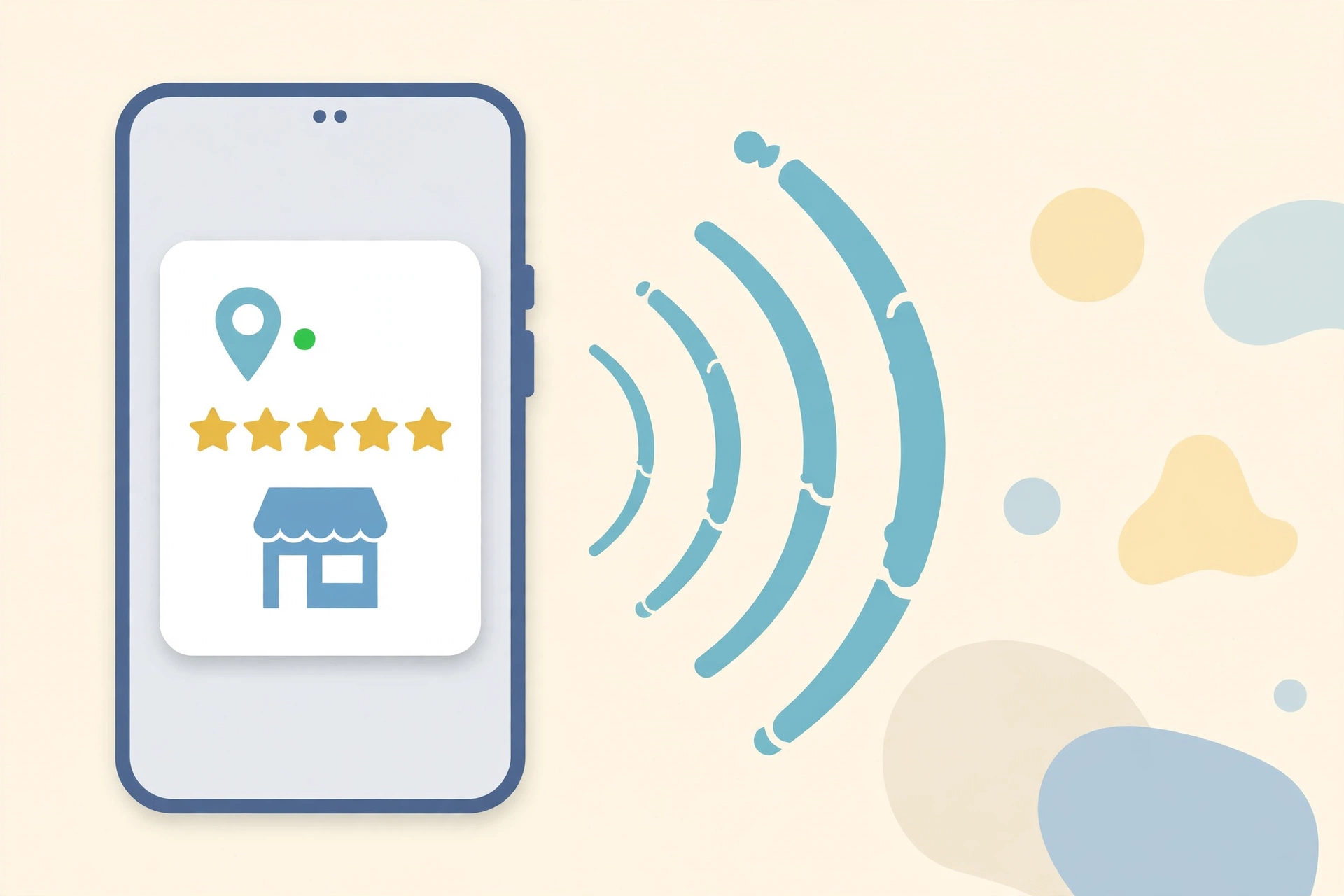
Google describes local ranking with three ideas: relevance, distance, and prominence. In a spoken “near me” moment, they play out very concretely:
- Distance is measured from the searcher, not your postcode pride. “Near me” means near them, right now. You cannot move your shop closer — but you can make sure your location and service areas are set correctly, so you are eligible in the searches actually around you.
- Relevance is your category and services. If your primary category is vague or your services list is empty, Google cannot confidently match you to “emergency plumber” or “vegan bakery,” spoken or typed.
- Prominence is your reputation. Review count, rating, and how current your information looks all feed whether Google trusts your name enough to say it out loud.
A hands-free searcher also cannot scroll your photos or read ten reviews. The spoken answer usually carries your name, rating, and whether you are open — which makes accurate hours a voice-search feature, not admin trivia. It also means there is no second chance in the interaction: a typed searcher who skips you can still find you in position six, but a spoken answer that names someone else ends the conversation entirely.
The worked example: one spoken search, step by step
It is 7:40 on a wet Tuesday. A homeowner with water coming through the ceiling holds their phone and says: “Plumber near me.”
Google locates the phone, then looks for businesses whose primary category matches plumbing, within a sensible radius, that appear open or plausibly available, weighted by how prominent their profiles are. It names one: a plumber 1.2 miles away, 4.7 stars from 180 reviews, hours showing open, services listing “emergency callout” and “leak repair.”
Now run the same moment for a competitor plumber — closer, at 0.8 miles — whose profile still uses a generic category, has no services listed, shows 19 reviews, and lists hours that ended at 5 p.m. Google cannot confirm he does emergency work or that he is reachable. The farther, clearer profile gets named. Every field that decided that outcome — category, services, hours, reviews — is a field the owner controls. Keeping those fields checked on a rhythm, rather than once a year, is what a regular profile routine is for.
Why reviews weigh even more when the answer is spoken
A typed list lets a customer compensate for a thin profile by browsing — clicking through, comparing, reading. A spoken answer allows none of that. When Google reads a result aloud, it tends to include the business name, its rating, and a sense of how many people rated it, because those are the trust signals a listener can absorb in one breath. That means the two numbers on your profile — stars and count — are doing double duty in voice: they help decide whether you are named, and then they are the substance of what gets said about you. A business with a strong count and a current rating sounds established in a car’s speakers. A business with four reviews and no recent activity sounds like a risk, read aloud, at the exact moment the customer cannot look any deeper. There is no separate voice optimisation to buy here; there is only the same honest review flow, heard instead of seen.
Service-area businesses: you can still be the answer
If you work at customers’ homes rather than from a shopfront, voice search can feel rigged against you — there is no address to be “near.” It is not rigged, but your setup has to be right: hide the home address, set your service areas honestly, and let reviews carry your prominence. The step-by-step setup is in my article on service-area businesses. Get that right and “near me” works from the customer’s location to your coverage area, which is how the query was always meant to behave.
A short checklist for being nameable
- Primary category: the most specific true one, not the broadest.
- Services: every service a customer might say out loud, listed in the words customers use.
- Hours: accurate, including “open now” reality — update them when they change.
- Reviews: a steady, honest flow, with replies. (Never incentives, never asking only happy customers — Google prohibits both.)
- Service areas: set if you travel to customers; honest if you do.
Work through that list once a month. The fields drift quietly — hours change, services evolve, a competitor’s reviews pile up — and a short monthly check is what keeps you the name Google says out loud.
Questions owners ask next
Is there a voice-search setting, schema or markup I need to add?
No. The spoken answer is chosen from the same local results as the typed list — there is no separate voice database to join and no special markup trick that wins it. Any product sold as “voice optimisation” is selling you the ordinary profile work under a new label: category, services, hours, reviews.
A competitor farther away got named instead of me. Why?
Because distance is only one of the three things weighed. If the farther business has a specific category, a full services list, hours showing it open and a strong review profile, while yours is vague on any of those, Google cannot confirm you match the spoken request — or that you are reachable. The clearer profile gets named over the closer, thinner one.
I work at customers’ homes, with no shopfront. Can voice search still find me?
Yes, if the setup is right. Hide the home address, set your service areas honestly, and let reviews carry your prominence. “Near me” then works from the customer’s location to your coverage area — which is how the query was always meant to behave for service-area businesses.
Do reviews really matter more when the answer is spoken?
Yes, because the listener cannot browse. When Google reads a result aloud it tends to include your name, your rating and how many people rated it — the trust signals a person can absorb in one breath. Those two numbers help decide whether you are named, and then they are the substance of what gets said about you.
What to do next
Say your own category out loud to your phone — “best [your trade] near me” — from a street near your business, and see who gets named. Then work the checklist against your profile, in that order. If you run these checks for clients, the system I use to hold profile fields, reviews, and updates in one routine is on my Local Alchemist AI page. It needs your own hosting and your own API keys, and anything AI-drafted needs your review before it is used.
Disclosure: the page linked above contains an affiliate link. If you buy through it, I may earn a commission at no extra cost to you.