
Every freelancer who sells local marketing hears the same sentence, usually within the first two minutes: “Thanks, but I already have a website.” It sounds like a door closing. Handled well, it is actually the start of the real conversation — because the owner is not wrong. They do have a website. They just believe it does a job it was never built to do, and correcting that belief honestly is the whole skill of handling client objections in local marketing.
This is not about pressure or clever comebacks. An objection answered with pressure ends the relationship. An objection answered with a fact the owner can check themselves opens one.
The short answer
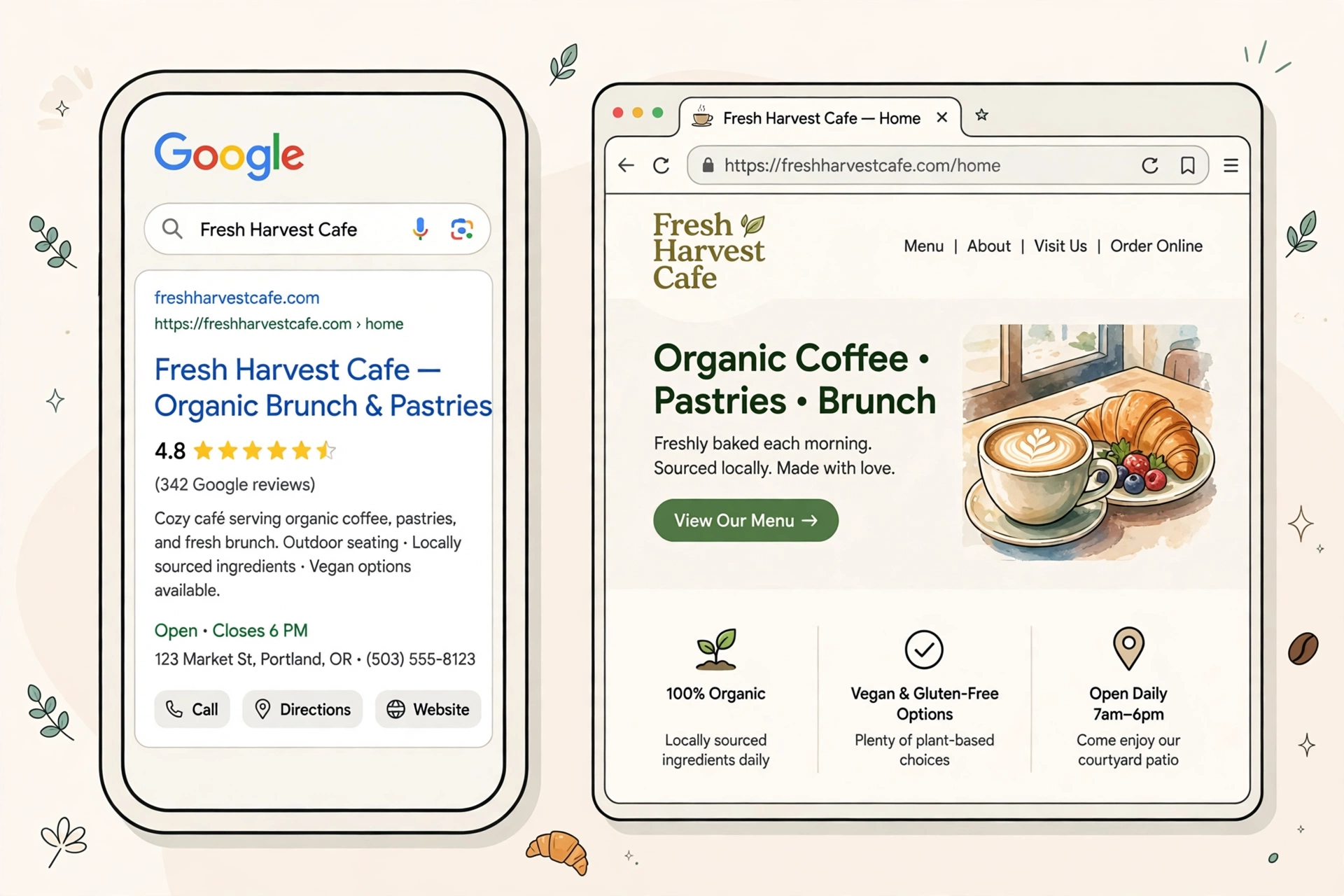
When a business owner says “I already have a website”, they usually mean they already spent on marketing, believe the website brings the customers, or do not know what else exists. The honest reply separates two jobs: the Google Business Profile gets the business found and shortlisted; the website convinces and explains afterwards.
What the owner actually means
When an owner says “I already have a website”, they usually mean one of three things:
- “I already spent money on marketing once, and I am not doing it again.”
- “I believe my website is what brings customers in.”
- “I do not understand what else there is, and I do not want to look uninformed.”
All three are reasonable. Your reply has to respect the money already spent, and quietly separate two different things the owner has merged into one: being found, and being chosen. The website mostly handles the second. The profile handles the first.
The fact that changes the conversation
Most local customers never reach a business’s website before deciding. They search “plumber near me” or “hair salon [town]”, and Google answers with the map results — the Google Business Profiles — before any website appears. The customer compares ratings, review counts, photos and opening hours right there, and calls from the profile. The website gets visited afterwards, if at all, to confirm a decision already made.
That is not an opinion to argue about; it is something you can demonstrate on the owner’s own phone in thirty seconds. Freelancers who run this demonstration weekly keep their notes and each prospect’s profile findings in one organised system so the whole thing takes two minutes, not twenty. The deeper comparison is laid out in the guide to Google Business Profile vs a website — worth reading before any pitch meeting, because this objection will come up in nearly all of them. Freelancers who handle it well describe their whole approach in how freelancers can sell Google Business Profile services.
The conversation, word for word
Here is an illustrative version of how the exchange can go — a composite of how these conversations typically run, not a transcript of a real client.
Owner: “Thanks for coming in, but honestly, we already have a website. The guy who built it said it would bring customers in.”
You: “It looks good, and he’s not wrong that you need one — it’s where people check you out properly. Can I show you one thing on your phone? Search for your trade and your town, the way a customer would.”
(The owner searches. The map results appear. Their business is either missing, or listed below competitors with fewer reviews.)
You: “See these three at the top? That’s the Google Business Profile list — it shows before any website. When someone needs a plumber today, they compare these: the stars, how many reviews, whether the photos look current, whether you’re open. Most of them call straight from here. Your website is what they look at after — if they get that far.”
Owner: “So the website was a waste of money?”
You: “Not at all. Think of it as two different jobs. The profile is what gets you found and shortlisted. The website is what convinces and explains — prices, galleries, the full story. You need both. The problem is only that right now one of the two jobs isn’t being done. Your profile has 11 reviews and the last photo is from two years ago — that’s not a website problem, it’s a profile that nobody’s maintaining.”
Owner: “And that’s what you do?”
You: “Part of it. Tell you what — don’t take my word for any of this. Let me do a free ten-minute check of your profile against the three businesses above you, and send you what I find in plain writing. If it looks fine, you’ve lost nothing. If there are gaps, you’ll see exactly what they are, and then we can talk about whether it’s worth fixing.”
Notice what that conversation never does. It never calls the website useless, never promises a ranking, never invents a statistic, and never asks for money. It offers a small, free, checkable thing — and the owner can verify every claim made in it from their own phone. Many freelancers keep a stock of these short profile findings ready by working through local businesses with bad Google profiles in their area, one trade at a time.
Mistakes that kill this conversation
- Attacking the website. The owner paid for it and may know the person who built it. Insulting it makes you the enemy, not the expert.
- Promising rankings. “I’ll get you to number one” is unverifiable, unprovable, and the owner has heard it before — usually from someone who disappeared.
- Drowning them in features. Owners do not buy “local SEO optimisation”. They buy the phone ringing. Keep the language on what customers do.
- Arguing when they say no. Some owners genuinely get all their work from referrals and do not need to be found by strangers. If that is true, say so, thank them, and leave the door open. Honesty here is remembered.
Turning the objection into a routine skill
You will hear this sentence hundreds of times, so it pays to have your response practised rather than improvised. Rehearse the demonstration on your own phone, keep the free-check offer genuinely free and genuinely short, and keep notes on each conversation — what the owner said, what you showed them, what happened next — in one organised place rather than in your head. Patterns emerge quickly: the same three concerns repeat, and your answers get calmer and shorter each time.

Questions owners ask next
The owner concludes their website was a waste of money. What do I say?
Correct it, honestly: it was not. The profile is what gets the business found and shortlisted; the website is what convinces and explains — prices, galleries, the full story. The owner needs both. The only problem is when one of the two jobs is not being done, and right now it is usually the profile — few reviews, a photo from two years ago — that nobody is maintaining. Never attack the website: the owner paid for it, and insulting it makes you the enemy, not the expert.
Should I promise a top ranking to win the work?
Never. “I’ll get you to number one” is unverifiable, unprovable, and the owner has heard it before — usually from someone who disappeared. What wins trust instead is a small, free, checkable offer: a ten-minute check of their profile against the three businesses ranking above them, sent in plain writing. If it looks fine, they have lost nothing; if there are gaps, they can see exactly what they are.
How do I prove the profile matters without arguing?
Use the owner’s own phone. Ask them to search their trade plus their town, the way a customer would, and let the map results make the point: the profiles appear before any website, customers compare stars, review counts, photos and hours right there, and most call straight from the profile. A fact the owner can check themselves in thirty seconds opens a conversation that no pitch can.
What if the owner genuinely does not need to be found on Google?
Say so, thank them, and leave the door open. Some owners truly get all their work from referrals and do not need strangers finding them — arguing otherwise only proves you were selling, not listening. Honesty in that moment is remembered, and it is what separates a professional the owner will call later from a salesperson they will avoid.
What to do next
This week, prepare for the objection before it happens: run the “trade + town” search for three businesses you would like as clients, note what their profiles show against the top three results, and write your version of the reply above in your own words. Then, when the sentence comes — and it will — you are not defending yourself, you are showing the owner something true on their own phone. If you want the prospecting, profile checks and follow-up organised in one system, you can see how I keep it together on my Local Alchemist AI page.
Disclosure: the page linked above contains an affiliate link. If you buy through it, I may earn a commission at no extra cost to you.